Bookshelf
Books that shaped how I think. Not a reading log — a small, opinionated shelf, read as seven linked stacks.
Artificial Intelligence
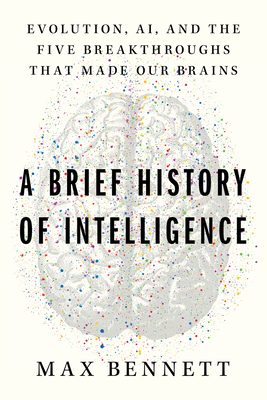 A Brief History of Intelligence Biological intelligence is the old R&D lab for artificial intelligence.
Bennett tells the story of intelligence as a handful of evolutionary breakthroughs, from the first steering worms to language. The reason it sits on an AI shelf: perception, memory, planning, and agency were each solved once before, under harder constraints. Biology is the prior art.
 AI 2041 Scenarios force strategy to leave abstraction and enter lived consequences.
Ten short stories, each paired with an analyst's essay — Lee and Chen force AI consequences out of abstraction and into a workflow, a labor market, a family. The method is the point: strategy sharpens when capability claims have to survive contact with a lived scenario.
 AI Superpowers China and America are not building the same AI future because they do not execute the same way.
Written in 2018, and still the cleanest statement of the deployment thesis: America leads research; China wins on execution tempo, data density, and market brutality. The mechanism Lee described is the one that later produced DeepSeek — advantage lives in deployment structure, not just lab quality.
 Co-Intelligence The first AI productivity jump comes from people learning how to think with machines.
Mollick's rules are usable the day you read them: invite AI to every task, treat it as a colleague rather than an oracle, keep the human in the judgment seat. The near-term compounding comes from people who learn to think with machines — not from waiting for AGI.
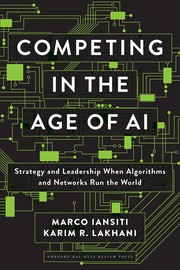 Competing in the Age of AI AI-native companies are operating systems, not departments with models.
Iansiti and Lakhani argue that AI-native firms run on digital operating models — scale, scope, and learning loops in place of org charts. The implication for banking is direct: an AI-native bank becomes an operating system, not a traditional organization with AI tools attached.
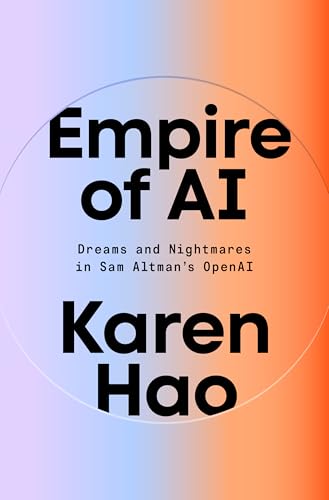 Empire of AI AI is already an empire: compute, capital, labor, narrative, and extraction.
The adversarial companion to the lab-hero narratives: Hao maps AI as political economy — data labor, compute concentration, narrative control, with OpenAI as the case study. Where the new rents will form is visible here before it is visible in any product announcement; AI power follows infrastructure ownership.
 Genesis AI is not a tool; it is a second form of intelligence entering human decision systems.
Kissinger's last book frames AI not as a tool but as a second form of judgment entering discovery, strategy, and governance. For a bank the framing is operational, not philosophical: the design question is where machine judgment is allowed to sit in the decision chain — and who answers for it.
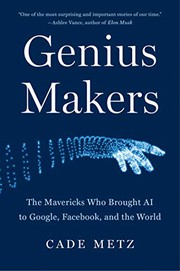 Genius Makers Deep learning was a talent war before it became a platform war.
Metz traces the talent war that built the current regime — the $44 million auction for Hinton's three-person company, the lab-founding, the poaching — years before the public heard of any of it. The institutions were the story; the hype arrived later.
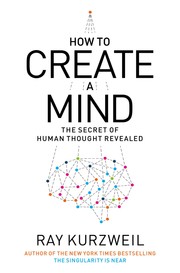 How to Create a Mind Intelligence is pattern recognition stacked into hierarchy.
Kurzweil's model treats intelligence as hierarchical pattern recognition — one clean bridge between human cognition, machine cognition, and knowledge architecture. The conceptual scaffolding behind any serious personal-memex project.
 Human + Machine Enterprise AI works when workflows are redesigned, not when tools are sprinkled on old processes.
The 'missing middle' argument: value appears where work is redesigned around human-machine collaboration, not where tools are sprinkled on old processes. Enterprise AI in one sentence — change the workflows, roles, controls, and metrics, or nothing changes.
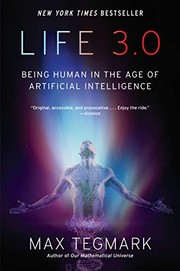 Life 3.0 The future is not predicted; it is selected through values, control, and coordination.
Tegmark's atlas of possible AI futures, organized by the choices that select among them: values, goals, control, coordination. The value is scenario hygiene — it drags the real strategic positions out of optimistic product language and makes them explicit.
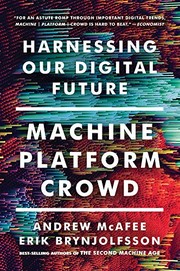 Machine, Platform, Crowd The firm is being rebuilt around algorithms, platforms, and networked coordination.
McAfee and Brynjolfsson on the business architecture of machines, platforms, and crowds. It reads today as an early statement of the absorption thesis: value migrates toward the platforms that coordinate machine capability and crowd participation, and everything else becomes their supplier.
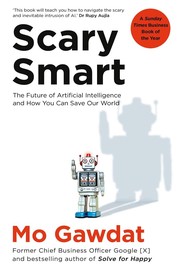 Scary Smart The danger is not evil AI; the danger is training intelligence on broken incentives.
Gawdat's warning is about incentives, not malice: intelligence trained inside broken human systems amplifies exactly what it was fed. The objective-function argument, made for a general audience — bad systems in, bad amplifiers out.
 Superagency Optimism is useful only if AI expands agency instead of centralizing dependency.
Hoffman's optimistic case: AI as an amplifier of human agency, argued by someone who funds the amplifiers. The tension is the useful part — optimism earns its keep only if agency is actually distributed, rather than captured by a few platforms and rented back.
 Superintelligence If intelligence becomes scalable, control becomes the central political problem.
The 2014 book that moved existential risk from internet forums into boardrooms — once Musk, Gates, and Altman praised it publicly, the safety debate had a canonical text. Bostrom's core case stands apart from the hype cycles that followed it: if capability outruns alignment, control becomes the hard problem, and it should shape architecture before scale.
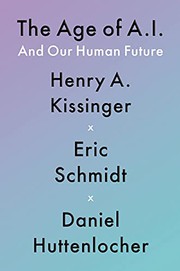 The Age of AI The state, the market, and the mind all get reorganized when machines generate knowledge.
Kissinger, Schmidt, and Huttenlocher on how machine-generated knowledge reorganizes the state, the market, and the mind. Its use is precise: board-level language for AI as infrastructure rather than feature — the register a regulated institution has to be able to speak.
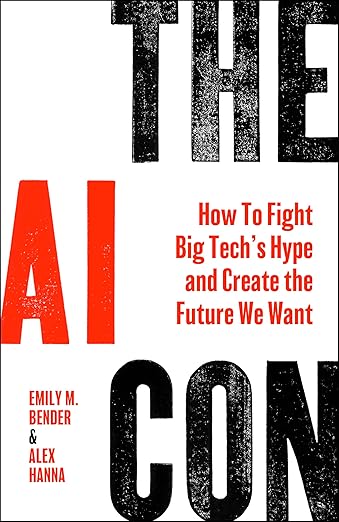 The AI Con Hype is a business model; skepticism is a governance tool.
Bender and Hanna's frontal attack on AI hype, capability inflation, and Big Tech capture. Kept on the shelf as an adversarial filter: every thesis in this stack should survive contact with this book, and the ones that do are the ones worth building on.
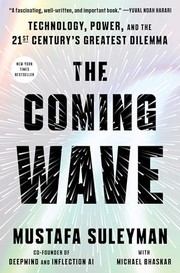 The Coming Wave Capability is accelerating faster than institutions can absorb; containment is the real strategy problem.
Suleyman's core claim is that AI, synthetic biology, robotics, and related technologies are arriving as a capability wave too broad for traditional regulation. The takeaway is containment design: any agentic bank must be built with control, audit, and institutional legitimacy from the first line of code — written by the man who now runs a superintelligence program, which is its own commentary.
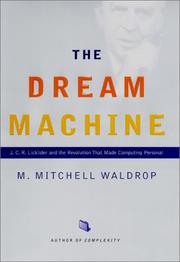 The Dream Machine The genealogy of interactive computing — Licklider, ARPA, and the dream of augmenting human thought.
Waldrop traces how a single vision — computers as partners that augment human thinking — moved from one man's head, J.C.R. Licklider, through ARPA into networks, personal computing, and the interfaces we now take for granted. It is one of the cleanest bridges between AI, infrastructure, and institutional imagination: capability arrives because someone funds and organizes a dream long before the market believes it.
 The Emotion Machine Emotion is not noise in cognition; it is part of the architecture.
Minsky's argument that emotion is architecture, not noise: priority, motivation, context, and value signals as parts of the machinery of thought. Written long before agent systems existed, it now reads as a design brief for them.
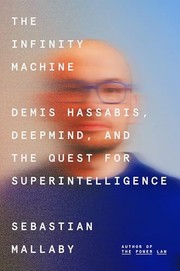 The Infinity Machine DeepMind is the question: can pure intelligence research become world infrastructure?
Mallaby's DeepMind story: pure intelligence research becoming strategic infrastructure, by way of games, neuroscience, and compute. The bridge it documents — from research to deployment power — is the same one every AI-native institution has to cross, banks included.
 The NVIDIA Way In the AI age, the most powerful platform may be the one everybody has to compute on.
Kim's account of the control layer: CUDA, the developer ecosystem, the timing, and Huang's execution culture — the bottleneck thesis of this shelf, told from inside the company that proved it. Everyone else's AI story runs on the infrastructure this book describes.
 The Optimist The Altman biography: capital formation, narrative, and personal indispensability at the center of the AI age.
Hagey — a Wall Street Journal reporter with access to Altman, his family, and the people around him — writes the fullest account yet of how a St. Louis dropout became the capital-formation engine of the AI age, including the most detailed reconstruction so far of the five days of November 2023. Read it against *Empire of AI*: the sourced, sympathetic-but-unsparing biography and the structural critique, describing the same company from opposite sides of the wall. Of the AI-lab histories on this shelf, this is the one I enjoyed most.
 The Second Machine Age Digital automation changes labor, scale, and returns to judgment.
The 2014 book that set the frame for automation economics: productivity, labor, and the returns to judgment under digital abundance. It supplies the macro context — wages, competition, economic power — that the firm-level AI books quietly assume.
 The Singularity Is Near Kurzweil's original wager: exponential curves eventually invade every institution.
The 2005 original: exponential curves eventually invading every institution, computation converging with biology. Read it today as intellectual history — this is the mental model beneath two decades of Silicon Valley's long-horizon AI optimism, and its fingerprints are on every datacenter announcement.
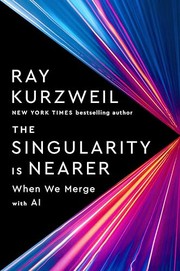 The Singularity Is Nearer Acceleration is the base case; denial is not a strategy.
Kurzweil updating his own wager for the LLM era. Treat it as timeline pressure rather than prophecy: even where the curve is wrong in detail, institutions should be built for capability arriving faster than regulators and incumbents expect.
 The Society of Mind The mind is not one thing; it is many small agents pretending to be one.
Minsky's mind as a society: many small, dumb agents whose interaction produces intelligence. Written in the 1980s, suddenly current — orchestration among specialized sub-processes is precisely how agentic systems are now being built, and this is that idea's founding text.
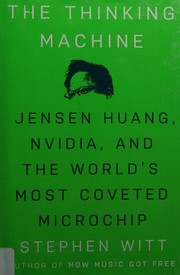 The Thinking Machine Frontier AI is a company-building race disguised as a research story.
Witt writes frontier AI as what it actually is: a company-building race wearing a research story's clothes. Capability curves are produced, not discovered — by founders, financing structures, and organizational culture — which is the same lesson as the old lab histories, one generation later.
 The Worlds I See AI begins in human seeing: data, vision, labor, and moral responsibility.
Li's memoir of ImageNet from the inside: the family dry-cleaning shop, the grant reviewers who called the project devoid of ideas, the labeling economy that made it real. AI systems are built from human choices — and human costs — long before they appear as model outputs.
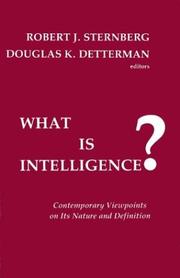 What Is Intelligence? Intelligence is not owned by humans; it is a pattern across life, language, and machines.
Agüera y Arcas widens the lens: intelligence as a pattern running through evolution, culture, language, and machines, with humans as one instance rather than the template. The strategic payoff is humility — anthropomorphic assumptions are a design trap.
Biography & Exceptional Operators
 American Prometheus Genius is not enough; once science becomes state power, politics owns the aftermath.
The central biography of modern scientific power: Oppenheimer turns theory into state capacity, then discovers that state capacity is not loyal to the scientist. The security hearing is the operative chapter — the same state that needed him destroyed him — and the lesson lands on anyone building powerful infrastructure: genius, politics, security, and guilt collide on a schedule you do not control.
 Andrew Carnegie Scale creates wealth; legitimacy requires a second act.
Steel, scale, self-education — and then the second act: the Gospel of Wealth, the thousands of libraries, the peace institutions. Carnegie is the case study in what accumulation cannot buy directly: industrial wealth becomes social power, and social power has to justify itself.
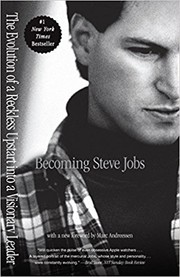 Becoming Steve Jobs The more useful Jobs is the second one: scarred, focused, still impossible, finally compounding.
The corrective to the caricature: this book tracks what happened between the humiliation of 1985 and the iPhone — the NeXT and Pixar years where the intensity stayed but learned to compound. What founders need is not the intensity itself; it is the conversion of intensity into repeatable operating control.
 Benjamin Franklin: An American Life Franklin is the prototype civic technologist: printer, diplomat, scientist, networker.
Franklin is the civic-technologist archetype: printer, scientist, networker, diplomat, institution-builder. It matters because he turns curiosity and usefulness into compounding public leverage.
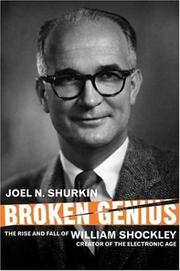 Broken Genius Raw intelligence without institutional judgment can poison the very industry it creates.
Shockley is the warning label attached to genius. The importance is brutal: a single mind can create a technological era, then fail as an institution-builder because intelligence without judgment becomes destructive.
 Churchill Language, will, and timing matter when institutions lose their nerve.
Churchill's life is rhetoric under existential pressure. The book matters because institutions sometimes require one person to name reality before the system can act.
 Einstein Imagination became physics because he protected first principles from professional consensus.
Einstein is the case study of first-principles imagination becoming world-historical physics. The book matters because it shows how deep independence can coexist with public responsibility, celebrity, exile, and political danger.
 Elon Musk Execution at this intensity creates miracles and casualties; both are part of the machine.
Musk is a study in mission pressure, manufacturing obsession, and extreme intolerance for slowness. It matters because it shows both sides of impossible execution: the miracle of compression and the human/institutional damage it can create.
 Grace Hopper and the Invention of the Information Age Abstraction becomes leverage when it lets ordinary people command machines.
Hopper's story is about abstraction becoming operational leverage. It matters because compilers changed who could command machines; that is the same strategic logic behind every interface revolution.
 Made in Japan Sony shows how a national manufacturing base becomes global cultural power.
Morita built Sony from occupied-Tokyo radio repair into the first Japanese brand the world trusted — and turned down easy licensing money to insist the name Sony appear on every product. The Walkman shipped over the objections of his own market research, which said nobody wanted a player that could not record. The lesson is operational: brand is built by refusing shortcuts, and product conviction outranks surveys.
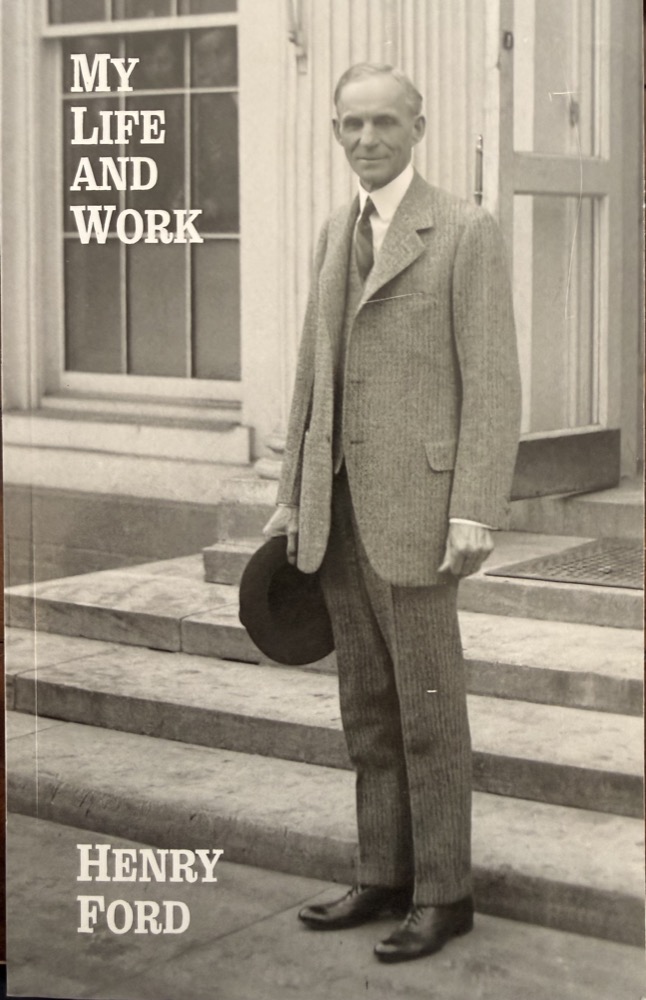 My Life and Work Ford turns production into ideology: simplify, standardize, compress cost, dominate.
Ford explains production as doctrine: remove waste, simplify motion, compress cost, raise volume. It matters because operational advantage becomes ideology when it changes the price of modern life.
 Random Reminiscences of Men and Events Rockefeller in first person: calm, moralized, ruthless, infrastructure-minded.
Rockefeller's own voice is calm, moralized, and ruthlessly managerial. It matters because operators often reveal more in what they normalize than in what critics accuse them of doing.
 Steve Jobs Taste is not decoration; taste is product strategy with dictatorship attached.
Jobs is the biography of taste as command. It matters because it shows that product strategy is not market research plus design polish; it is a founder forcing coherence onto technology, organization, and customer imagination.
 Surely You're Joking, Mr. Feynman! Curiosity beats credentials when the mind refuses institutional sleep.
The book is less a memoir than a demonstration of anti-bureaucratic intelligence. It matters because Feynman shows how a mind stays alive: play with reality, ignore false status, and attack problems directly.
 The Art of Doing Science and Engineering Taste, problem selection, and the compounding edge of working on what matters.
Hamming's lectures are about the meta-skill beneath all technical work: how to choose problems worth your life, how to keep your edge compounding, and why the people who do important work are usually the ones who deliberately decided to. It belongs next to the scientist and operator biographies — the same lesson, stated as method.
 The Autobiography of Benjamin Franklin Self-improvement becomes power when tied to public usefulness.
The thirteen virtues, the Junto club, the printing network: Franklin treats character, habits, reputation, and institutions as systems to be engineered — and documents the engineering. The original manual of deliberate self-construction, still unembarrassed by its successors.
 The Idea Factory Bell Labs proves the thesis: talent density plus patient capital creates civilization-grade options.
The transistor, information theory, and Unix came out of one building — Gertner shows the structure behind it: talent density, patient capital, and corridors designed for collisions. Not nostalgia but a standing design question for every AI-native company: what arrangement lets talent produce durable options instead of quarterly noise?
 The Man in the Arena Criticism is cheap; exposure is the price of doing.
Roosevelt's passage is not finance or infrastructure — it is ethos. Its claim about builder psychology is permanent: the credit belongs to the one actually in the arena, marred by dust and sweat, not to the critic who points out where the strong stumbled. A short reminder that exposure, not commentary, is the cost of building anything real.
 The People's Tycoon Ford was not only a manufacturer; he was a mass-society force.
Ford was not just an industrialist; he was a mass-market cultural force. The book matters because it shows how a production system can reshape workers, consumers, cities, politics, and national imagination.
 The Pleasure of Finding Things Out The operating system is simple: ask clean questions, distrust ceremony, love reality.
Feynman's epistemology in plain language: ask clean questions, distrust ceremony, love reality. The founder-scientist stance in its purest form — the reward is finding out what is actually true, not being right in public.
 The Radium Woman Discovery is expensive; Curie paid with body, family, reputation, and time.
Curie's life with the romance stripped out: discovery under scarcity, discipline, and bodily cost — the notebooks still radioactive a century later. Frontier science demands sacrifice long before it becomes institution; this is the record of the price.
 The Snowball Buffett as temperament — patience, reputation, and the long compounding of capital.
Schroeder's biography is less about stock-picking than about character: the patience, the obsession with reputation, the refusal of unforced errors, and the discipline of letting capital compound for decades. It belongs with the operator lives — a study in how temperament, not raw genius, is the scarce resource in allocation.
 Titan Rockefeller understood the master rule: control the rails, let others fight over cargo.
Rockefeller is the cleanest case of infrastructure control in business history. Its lesson is direct: own the rails, discipline the system, and let weaker players confuse visible cargo with real power.
Progress, Infrastructure & Operating Systems
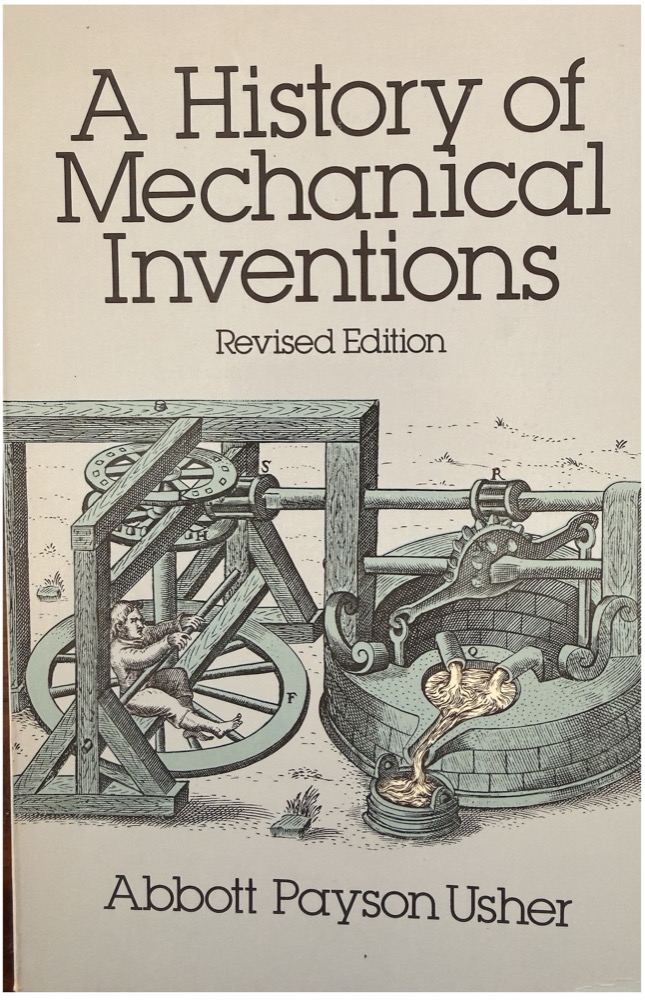 A History of Mechanical Inventions Invention is cumulative, social, and path-dependent; nobody builds from zero.
Usher shows invention as cumulative synthesis, not heroic lightning. It matters because every breakthrough depends on inherited components, social context, and a prepared system of events.
 An Elegant Puzzle Systems for engineering-organization design at scale.
Larson treats engineering management as a systems problem — team sizing, org structure, on-call, migrations, technical debt — with concrete heuristics rather than platitudes. Increasingly relevant as AI cores and agentic workflows turn org design into a core part of the product itself.
 High Growth Handbook A practical manual for scaling a fast-growing company — unromantic and useful.
Gil collects the hard, specific decisions that hit when a company scales fast: hiring executives, managing a board, org design, M&A. Not a theory of leadership — a field guide to the problems that actually arrive, in roughly the order they arrive.
 Maintenance: Of Everything Civilization is not only invention — it is upkeep, repair, and sustainment.
Brand's case is that the glamorous part of technology, the launch, is the small part; the real work is maintenance — manuals, repair, reliability, the unglamorous sustainment that keeps systems alive. It maps directly onto financial infrastructure, where uptime beats launch theatre and the institutions that endure are the ones that treat maintenance as the main event.
 Scaling People Management as a system: cadence, role clarity, and execution hygiene.
Hughes Johnson turns the soft work of management into explicit operating discipline — how to set context, define roles, run cadences, and build the scaffolding that lets people execute as an organization grows. The natural companion to a scaling handbook: the system beneath the decisions.
 Where Is My Flying Car? A diagnosis of why ambitious futures stalled — energy, regulation, and lost nerve.
Hall asks why the twentieth century's trajectory of ever-more energy and ambition flattened, and blames a mix of stalled energy abundance, regulation, and cultural risk-aversion. A provocative companion to the progress-studies lens: what blocked the futures we were promised, and what it would take to unblock them.
Technological Sovereignty & Institutional Power
 Crypto The cypherpunk line: privacy, cryptography, and resistance to the state.
Levy chronicles the fight to put strong cryptography into public hands against government resistance — the intellectual ancestry of the cypherpunks, digital cash, and everything that later became crypto. A direct relative of the Sovereign Individual thesis: cryptography as the technology of exit.
 Power and Progress Technology doesn't automatically share its gains — institutions decide who wins.
Acemoglu and Johnson's history of a thousand years of technology argues that progress only broadens prosperity when institutions force the gains to be shared; left alone, technology tends to concentrate elite power. The direct rebuttal to techno-optimism, and central to any honest account of AI and labor.
 Seeing Like a State States make the world legible, then break it to fit the simplified model.
Scott's idea of legibility is one of the most useful in the canon: to govern, states flatten messy reality into countable categories, then impose those categories back onto the world — often destroying the local knowledge that made it work. A powerful frame for AI, banking, and regulation, where the model and the territory are constantly confused.
 Surveillance Valley The military and surveillance roots behind the internet's freedom story.
Levine traces the internet's origins back to counterinsurgency and military surveillance research, complicating the cypherpunk myth that the network was ever neutral or liberating by design. Essential context for the Palantir debate: the infrastructure of freedom and the infrastructure of surveillance share a lineage.
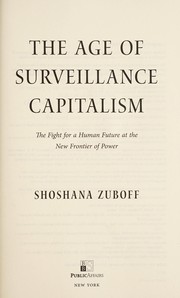 The Age of Surveillance Capitalism Platforms manufacture power from behavioral data — the dark twin of the Sovereign Individual.
Zuboff's thesis is that platforms discovered a new logic of accumulation: harvest human experience as behavioral data, predict it, and sell the certainty. Where the Sovereign Individual imagines exit, Zuboff shows capture — the same digital substrate producing concentrated private power rather than individual freedom.
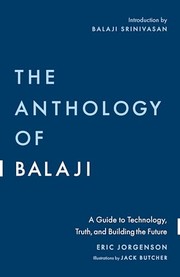 The Anthology of Balaji Network states, crypto-sovereignty, and startup societies — Karp's opposite pole.
Jorgenson distills Balaji Srinivasan's thinking on network states, crypto-sovereignty, and starting new societies from scratch. I'd place it as the opposite pole to Karp: where The Technological Republic says rebuild the state, this says route around it and build new ones.
 The Narrow Corridor Liberty survives in a narrow corridor between the weak state and the total state.
Acemoglu and Robinson argue that freedom is neither the absence of the state nor its dominance, but a fragile balance held in a narrow corridor — society strong enough to check the state, the state strong enough to deliver order. The institutional counterweight to pure exit fantasies.
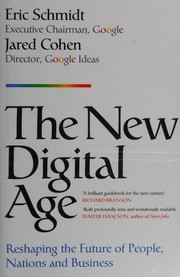 The New Digital Age The Google / State Department view of the internet, geopolitics, and the digitization of states.
Schmidt and Cohen read the internet as a geopolitical force — reshaping security, statecraft, dissent, and how governments project power online. A useful establishment-eye view of how digital networks and state power are converging, written from the seam between Silicon Valley and foreign policy.
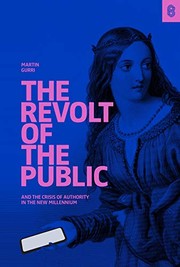 The Revolt of the Public Networked information is dissolving the authority of institutions.
Gurri's thesis: once information stopped being scarce, the public gained the power to negate institutions faster than institutions can produce legitimacy — across politics, media, finance, and regulation. Essential for anyone building inside regulated trust: the ground under institutional authority is moving, and protocols are part of what rushes in to fill the gap.
 The Technological Republic A Palantir manifesto: technology should return to serious national problems, not consumer toys.
Karp's argument is that the West's most capable engineers drifted into building consumer conveniences while ceding the hard problems — defense, state capacity, institutional strength — to no one. It is a call for technology to re-enter the arena of serious national power, and the clearest statement of the "build for the state" pole of the sovereignty debate.
Manhattan Project & the Atomic Age
 Arsenals of Folly The bomb did not end history; it industrialized existential risk.
Rhodes follows the bomb into the arms race, where success mutates into systemic danger. It matters because institutions can continue optimizing long after the original problem has changed.
 Atomic Salvation The hard question: when does one horror prevent another?
The casualty-accounting argument around Hiroshima and Nagasaki, made without flinching. It does not settle the debate — but the exercise is the value: some decisions have no clean option, only an accounting, and the operator has to be able to face that arithmetic without sentimentality.
 Better a Shield Than a Sword Teller's own case: technology as deterrence, security, and moral argument.
Teller arguing his own defense — read it as doctrine, not analysis. It is the clearest window into the mind that answers every risk with more capability, and the natural pairing with *American Prometheus*: two poles of the same laboratory, arguing across half a century.
 E=mc2 One equation became an industrial, military, and metaphysical event.
Bodanis writes the biography of an equation — its ancestors, its birth, its consequences. The lesson runs through this whole shelf: abstract knowledge can sit quietly for decades, then suddenly become the organizing principle of an age.
 Edward Teller: The Real Dr. Strangelove Teller shows the dark side of strategic imagination without restraint.
Teller is ambition after the bomb: brilliant, insecure, strategic, polarizing. The book matters because it shows how technological imagination can outrun political and moral governance.
 Now It Can Be Told Groves is the operator lesson: impossible programs need authority, logistics, and intolerance for drift.
Manhattan from the command seat rather than the seminar room: procurement, construction, secrecy, discipline, and the authority to compress time. Read it after Rhodes — the same project, seen from logistics instead of physics, which is where most impossible programs are actually won.
 Pieces of the Action The operator's account of mobilizing science for the state — radar, penicillin, the bomb.
Bush built the machinery that turned American science into wartime capability: the OSRD, the contracts, the labs, the coordination between government, universities, and industry. It is the clearest first-person manual on how research becomes state-scale execution — the same coordination problem any institution faces when it tries to turn ideas into infrastructure.
 Stealing the Atom Bomb Once knowledge exists, secrecy becomes delay, not prevention.
This is about what happens after a forbidden technology proves possible. It matters because the strategic lesson is permanent: once knowledge exists, control shifts from prevention to delay, denial, diplomacy, and deterrence.
 The Bomber Mafia Precision ideology failed when reality refused the model.
Gladwell shows how a precision-bombing theory met the reality of war. It matters because every technology ideology promises cleaner execution until friction, incentives, weather, and humans break the model.
 The Making of the Atomic Bomb Manhattan is the extreme case of science, capital, state, and urgency aligned.
Rhodes follows the whole arc — from Szilard conceiving the chain reaction at a London traffic light in 1933 to an industrial state employing well over a hundred thousand people, most of whom never knew what they were building. The master narrative of science becoming state-scale execution: talent, capital, secrecy, logistics, and a deadline fused into one machine.
 The Universe and Dr. Einstein A short bridge from public imagination to modern physics.
This is a compact gateway into relativity and Einstein's public meaning. It matters because strategic thinkers need enough physics literacy to understand when the world-picture itself has changed.
Philosophy & Reality Modeling
 Gödel, Escher, Bach Minds emerge from loops; intelligence is recursion with meaning.
The strange-loop book: Hofstadter braids formal systems, music, and art into one argument — that mind emerges from self-reference. Decades on, it remains the deepest meditation on how intelligence might arise from recursion. Read slowly, in pieces; it is a book to live with, not finish.
 Letters from a Stoic Wealth, power, time, and death: the executive curriculum before business schools.
Seneca wrote these as a rich and powerful man advising a younger official — which is exactly why they hold up. This is not renunciation from a cave; it is discipline practiced from inside wealth and proximity to power. The executive problem is ancient — how to possess power without being possessed by it — and the curriculum has not been improved on since.
 Meditations Private discipline under public burden.
Marcus Aurelius writes private discipline from inside public burden. It matters because power without inner command becomes reaction; Stoicism is the operating discipline of pressure.
 Poor Charlie's Almanack Mental models, inversion, and multidisciplinary judgment — the reality-modeling canon.
Munger's collected talks are a manual for thinking: build a latticework of mental models from many disciplines, invert problems, respect incentives, and avoid the standard ways intelligent people fool themselves. It sits near the center of the reality-modeling shelf — the practical companion to Popper, Kuhn, and the scout mindset.
 Stubborn Attachments Long-term growth as a moral obligation.
Cowen argues that sustainable economic growth, compounded over centuries, dominates almost every other moral consideration — and that we owe the future a relentless commitment to it, bounded by human rights as hard constraints. A compact case for treating the long arc of progress as an ethical duty, not just a preference.
 The Beginning of Infinity Progress is not luck; it is error correction plus good explanations.
Deutsch's claim is stark: good explanations create unbounded progress, and problems are inevitable but soluble. Optimism here is not a mood — it is an epistemic commitment to error correction, which makes this the philosophical floor under the whole progress shelf.
 The Fabric of Reality Reality is one system; physics, computation, evolution, and knowledge interlock.
Deutsch unifies physics, computation, evolution, and knowledge into one worldview. It matters because it trains the mind to stop treating domains as silos when reality is one connected system.
 The Logic of Scientific Discovery Truth advances by killing weak ideas, not protecting elegant ones.
Popper's point is that knowledge grows through conjecture and refutation. It matters because organizations die when they protect beautiful theories instead of exposing them to attack.
 The Myth of Sisyphus Meaning is not found; it is imposed through stance.
Camus starts from absurdity and refuses surrender: one must imagine Sisyphus happy. Meaning is imposed through stance, not discovered as fact — the shortest useful philosophy on this shelf.
 The Open Society and Its Enemies Closed systems fear criticism because criticism is how societies stay alive.
Popper's defense of societies that institutionalize criticism, written in wartime exile against Plato, Hegel, and Marx. The argument applies one-to-one to companies: closed systems feel stable right up until they lose the ability to correct error.
 The Scout Mindset The mind must choose: defend identity or see the battlefield.
Galef separates seeing from defending. It matters because the most expensive errors are not ignorance errors; they are identity-protection errors made by intelligent people.
 The Story of Philosophy A fast map of the old operating systems of thought.
Durant gives a fast map of major philosophical systems. It matters because before building new mental models, you need to know the old operating systems that still run inside institutions.
 The Structure of Scientific Revolutions Paradigms do not die politely; they lose institutional control.
Kuhn on regime change in knowledge: normal science, anomaly, crisis, revolution. Paradigms are social infrastructure — facts alone do not move institutions until the old frame loses control — and the mechanism applies to markets and companies as cleanly as to physics.
 Zen and the Art of Motorcycle Maintenance Quality is the bridge between thinking and doing.
Pirsig makes quality the bridge between thought and work. It matters because maintenance is not low-status labor; it is where reality audits philosophy.
History, Civilization & Technology
Civilizational Pattern Recognition
 Collapse The failure modes of societies.
Diamond examines why some societies facing environmental, political, or economic stress collapse while others adapt, and the pattern is uncomfortable: elites insulating themselves from the consequences of their decisions is the most reliable predictor of catastrophic failure. The institutional design lesson is direct — the people who build systems should remain exposed to the systems they build.
 Guns, Germs, and Steel Geography and material constraints as history's hidden engine.
Diamond demonstrates that the decisive variable in which civilizations accumulated power was not culture or innate capability but geography: crop suites, domesticable animals, the orientation of continents. For anyone building infrastructure in emerging markets, it is a necessary corrective — the constraints on financial inclusion are often material and geographic, not merely regulatory, and understanding the base layer changes what interventions make sense.
 Nexus Information networks as civilization infrastructure.
Harari traces how each civilizational leap — writing, printing, digital networks — was not just a communication upgrade but a rewiring of who could coordinate with whom and at what cost. The argument lands at a moment when agentic AI is compressing coordination costs toward zero again, and no one yet knows which institutions survive that compression and which dissolve.
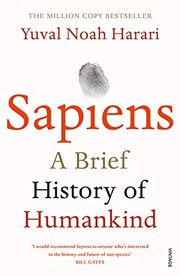 Sapiens Macro human-coordination story.
Harari argues that what separates us from other animals is not intelligence but the capacity to coordinate at scale around shared fictions — money, laws, nations, corporations. That insight lands differently from inside financial infrastructure: banking systems are themselves shared fictions, no more or less real than the Roman legal code, and just as consequential when they fail or evolve.
 The Age of Extremes The twentieth century is the compression chamber of ideology, war, and state capacity.
Hobsbawm's short twentieth century — 1914 to 1991 — read as one violent arc of ideology, war, capitalism, and state power. The pattern to carry forward: modernity is not smooth progress but acceleration under conflict, and the century everyone now reaches for as comparison lives in this book.
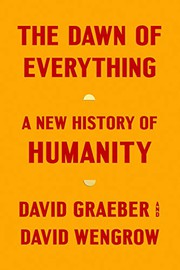 The Dawn of Everything History is wider than the standard ladder; institutions were choices before they became cages.
Graeber and Wengrow attack the simple ladder from primitive to modern. It matters because institutional imagination expands when history stops looking inevitable.
 The Decline and Fall of the Roman Empire The imperial-decay pattern, in full.
Gibbon wrote what remains the definitive case study in institutional decay at scale — a millennium of slow rot in which the Roman system degraded not all at once but through the accumulation of small compromises, each defensible in isolation, none survivable in aggregate. Reading it now, the pattern is recognizable in any large institution: the moment the machinery of coordination starts serving its own maintenance rather than its original purpose, the decline has already begun.
 The World Until Yesterday What pre-modern social systems still teach us.
Diamond surveys what traditional societies — those operating without states, banks, or formal legal systems — actually solved: dispute resolution, child-rearing, elder care, risk-pooling. What strikes me is how many of these mechanisms are precisely what formal financial institutions claim to replace, and how rarely the formal version outperforms the traditional one on outcomes that matter to people on the edge of subsistence.
Technology as Civilization Engine
 Energy Smil's condensed energy lens.
A tighter version of Smil's central argument: that energy conversion efficiency is the master variable of civilizational capacity. Where the longer book is exhaustive, this one is surgical — useful when you need the core insight without the full apparatus, and a good reminder that the clean energy transition is not primarily a policy problem but an engineering one with very hard physical constraints.
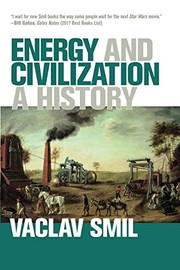 Energy and Civilization Energy as the base layer of all progress.
Smil reconstructs the entire arc of human history through a single lens: how much energy a society could capture, convert, and deploy. Every leap in institutional complexity — agriculture, industry, the digital economy — follows a prior leap in energy density. It is the most rigorous version of the argument that infrastructure precedes everything else, and it is the book to return to whenever a conversation about technology gets too abstracted from the physical substrate underneath.
 Numbers Don't Lie Quantitative reality checks on how the world actually works.
Smil uses 71 short essays to demolish a long list of popular narratives by subjecting them to arithmetic. The lesson is not cynicism but discipline: before building a system around an assumption about how the world works, check whether the numbers support it. In financial infrastructure, model risk and narrative risk are the same thing — both are what happens when you mistake a compelling story for a measured fact.
 Origins How geology and the material world shaped civilization.
Dartnell traces the civilizational map back to tectonic plates, soil chemistry, and river systems — the geological inheritance that determined where cities rose, where empires formed, and where industrialization first took hold. It is a useful corrective to any account of history that treats institutions as primary; they are downstream of rock, water, and the particular accidents of where useful materials happened to concentrate.
 Technics and Civilization Technology is civilization's nervous system, not a toolbox.
Mumford treats technology as civilization's nervous system. It matters because tools are never just tools; they reorganize time, cities, labor, power, and imagination.
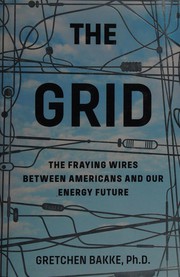 The Grid Electricity infrastructure as civilization's substrate.
Bakke tells the story of the American electrical grid — a system so deeply embedded in daily life that its fragility has become invisible. What she describes is the paradox of mature infrastructure: the more successfully it fades into the background, the more catastrophic its failure becomes, and the harder it is to justify investment in its maintenance. The same dynamic operates in payment rails, banking systems, and every other piece of infrastructure that people use without noticing.
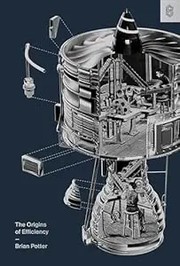 The Origins of Efficiency Efficiency as institutional doctrine.
Potter (via Construction Physics) examines how the concept of industrial efficiency was not discovered but constructed — a doctrine that emerged from specific institutional contexts and reshaped how organizations understood their own purpose. The argument matters for anyone building agentic systems: efficiency metrics are not neutral; they embed the priorities of whoever defined them, and optimizing for the wrong proxy is a reliable path to systems that score well and perform badly.
Institutions, Power, and State Capacity
 Chokepoints Economic warfare and infrastructure leverage.
Fishman documents how the United States learned to weaponize financial infrastructure — SWIFT access, dollar clearing, semiconductor export controls — as a substitute for kinetic force. The book is a detailed account of how infrastructure becomes coercive leverage, and it is impossible to read it and still believe that payment systems, banking rails, or chip supply chains are merely technical. Sovereignty and infrastructure are the same argument stated in different registers.
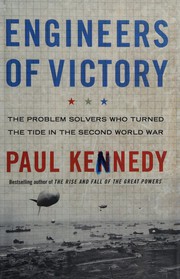 Engineers of Victory The problem-solvers who turned the tide through war production.
Kennedy identifies the five operational problems that had to be solved to defeat the Axis — submarines, air power, amphibious landing, strategic bombing, logistics — and traces how they were solved by mid-level engineers, tacticians, and organizational designers working below the level of grand strategy. The pattern is the same one that determines outcomes in large-scale infrastructure projects: the top-level vision matters less than the problem-solving culture two levels below it.
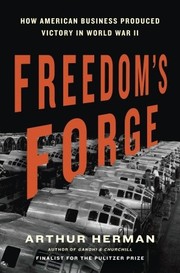 Freedom's Forge American industrial mobilization in WWII.
Herman reconstructs how American manufacturing capacity — not battlefield tactics — decided the Second World War, and how that capacity was built through an improvised partnership between government and private industry that neither side fully controlled. The lesson for institutional builders is that the bottleneck in transformational moments is rarely ideas; it is the logistical and organizational machinery needed to produce at scale, reliably, under pressure.
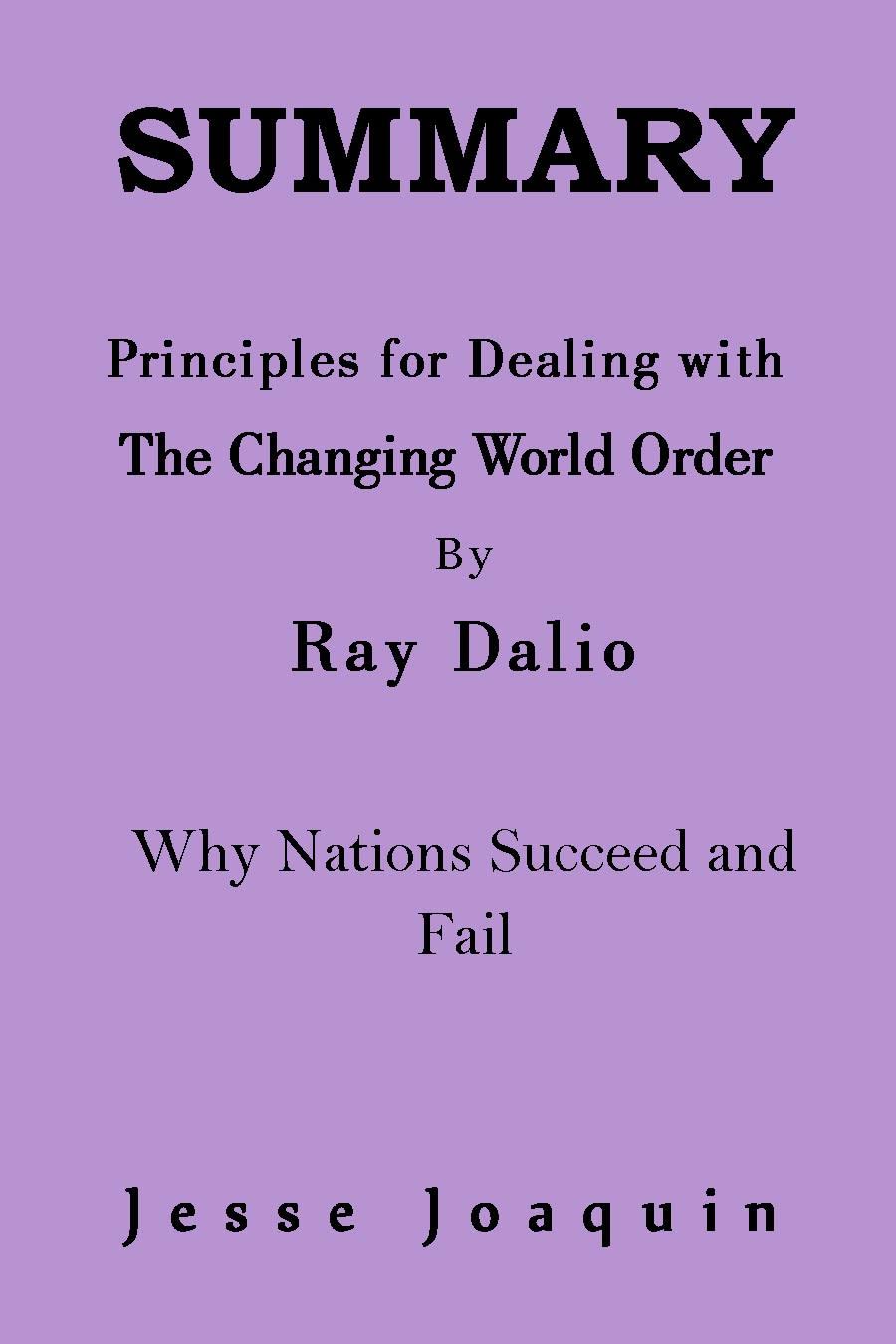 Principles for Dealing with the Changing World Order Empire cycles and the shifting of capital.
Dalio maps the rise and fall of reserve currencies, empires, and financial orders across five centuries and finds the pattern disturbingly regular: debt accumulation, currency debasement, internal conflict, external challenge, and eventually the shift of global capital to a new center. Whether or not you agree with his determinism, the framework forces you to locate your own moment in a longer cycle rather than treating the current monetary order as a permanent fact of nature.
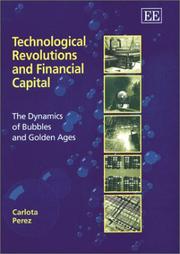 Technological Revolutions and Financial Capital Bubbles are not noise; they are the installation phase of new infrastructure.
Perez explains the cycle — installation, bubble, crash, deployment, golden age — that makes financial manias legible as infrastructure financing. Bubbles are not noise; they are how new rails get funded. Banks and platforms are living inside a deployment-phase shift right now.
 The Guns of August Catastrophe begins when elites mistake momentum for strategy.
Tuchman shows how elites sleepwalk into catastrophe while believing they are executing plans. It matters because momentum is not strategy, and bureaucratic confidence can be fatal.
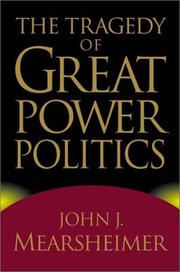 The Tragedy of Great Power Politics Hard-power realism, stated without sentiment.
Mearsheimer argues that great powers are structurally compelled to maximize their relative power regardless of domestic ideology — that the tragedy is not individual malice but systemic logic. For anyone building financial infrastructure in the space between competing hegemons, this is required reading: the neutrality of technical systems is an illusion, and the geopolitical context in which infrastructure operates is not a background condition but a design constraint.
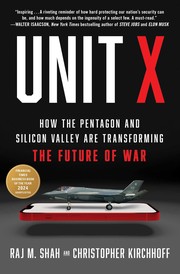 Unit X The Pentagon and Silicon Valley transforming each other.
Shah and Kirchhoff recount the founding of DIU — the Defense Innovation Unit — and the slow, friction-heavy process of connecting the world's most advanced technology ecosystem to the world's largest institutional buyer. The institutional translation problem they describe is exactly fintech's: the technology that could transform an institution is usually available; the constraint is the procurement culture, the risk tolerance, and the internal incentives of the institution that needs to adopt it.
Money as Civilizational Technology
 Broken Money Monetary systems as technological stacks.
Alden frames monetary history as a succession of technological stacks — commodity money, bank credit, fiat, and now programmable digital currency — each with its own throughput characteristics, failure modes, and geopolitical implications. The frame is useful because it de-mystifies monetary transformation: the question is not whether the current stack will be replaced but when, and by what, and who controls the upgrade.
 Debt: The First 5,000 Years Money, obligation, and social order across millennia.
Graeber dismantles the textbook story that money evolved from barter — it did not; credit and obligation came first, and coin was a late formalization. The implication for anyone building financial infrastructure is unsettling and clarifying: debt is not a financial instrument but a social relation, and the systems we build to manage it are encoding moral assumptions about who owes what to whom. That is not a small design choice.
 Money Money as a made-up social technology.
Goldstein traces money's history with the rare combination of intellectual clarity and accessible prose, landing on the insight that every form of money has been a social technology — a shared agreement — rather than a natural phenomenon. It is a short book, but the core argument is load-bearing for anyone building payment infrastructure: the system you are building is not encoding objective value but constructing a shared fiction that will be as durable as the trust it can sustain.
 The Ascent of Money Financial history as civilization history.
Ferguson argues that financial innovation — bonds, insurance, equity, futures — was not a parasite on the real economy but one of its primary engines, enabling the accumulation of capital that funded everything from the Dutch empire to the American railroad. The history of finance is the history of how societies organized risk, and understanding that history is prerequisite to building systems that extend it to the people who have been excluded from it.
 The Philosophy of Money Money as abstraction and culture.
Simmel wrote this in 1900 and it remains the deepest account of what money does to human consciousness and social relations — how the universal solvent of monetary exchange dissolves particular bonds and replaces them with abstract equivalences. It is not a comfortable book for anyone who builds financial systems, but it is an honest one: financial infrastructure shapes how people relate to each other and to the world, not just how they transfer value.
 The Price of Time Interest rates as institutional gravity.
Chancellor traces the history of interest — from ancient Mesopotamia to the zero-rate experiments of the 2010s — and makes the case that suppressing it systematically distorts every other signal in the economy. It is one of the clearest arguments on record for why the cost of capital is not just a financial variable but an institutional one: when it is wrong, the misallocation propagates through every system that prices risk.
 When Money Dies Hyperinflation and institutional collapse.
Fergusson's account of Weimar Germany's hyperinflation is not primarily an economic history but an institutional one — the story of how a society's coordination mechanisms break down when the unit of account that underlies all contracts, savings, and expectations loses its meaning. The collapse of money is the collapse of the social agreement that makes economic life possible, and this book makes that abstraction viscerally concrete.
Technology, Sovereignty, and Future Order
 Army of None Autonomous weapons and the question of institutional control.
Scharre asks what happens to accountability, law, and the ethics of violence when the decision to use lethal force is delegated to a machine. The question is not only military; the same delegation of consequential decisions to autonomous systems is happening in finance, credit, and access to essential services. The institutional control problem — who is responsible when the algorithm decides — is the defining governance question of the agentic era, and Scharre sets it up with the moral clarity it deserves.
 Chip War AI runs on geopolitics before it runs on models.
The history of computing told as a supply-chain war: one Dutch lithography monopoly, one Taiwanese foundry, and the export-control machinery built around them. Read it next to *Titan* — the same logic, run at nation scale: whoever holds the bottleneck sets the terms for everyone downstream. AI sovereignty starts below the model layer.
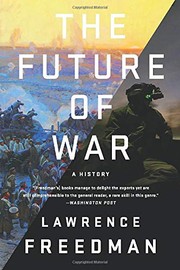 The Future of War How technological change reshapes military order.
Freedman traces how successive waves of technology — from the machine gun to precision munitions to networks — transformed not just tactics but the entire political logic of war, including who fights it, what counts as victory, and where the boundaries of the battlefield lie. The argument matters beyond defense: the same pattern of asymmetric disruption applies to financial systems, where new technology repeatedly redraws the competitive landscape faster than incumbent institutions can adapt.
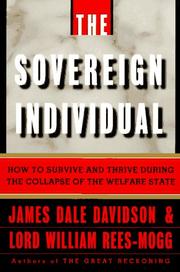 The Sovereign Individual In the digital age, the individual, capital, and the network can exit the state.
Davidson and Rees-Mogg argue that as value moves onto networks and cryptography, the most capable individuals and their capital can route around the nation-state, eroding its monopoly on protection and taxation. Not because every prediction lands, but as a powerful lens: it names the exit option that crypto, remote work, and digital capital keep making more real.
 The War Below Lithium, copper, and the resource constraints behind the future.
Scheyder documents the global scramble for critical minerals — lithium, cobalt, copper — that the energy transition requires, and the enormous gap between the political promise of clean technology and the physical reality of digging enough of it out of the ground. It is the Smil argument applied to the green transition: every future is built on materials, and the materials have geography, and the geography has politics.